
When the Waters Were Changed

“ONCE upon a time Khidr, the Teacher of Moses, called upon mankind with a warning. At a certain date, he said, all the water in the world which had not been specially hoarded, would disappear. It would then be renewed, with different water, which would drive men mad.
Only one man listened to the meaning of this advice. He collected water and went to a secure place where he stored it, and waited for the water to change its character.
On the appointed date the streams stopped running, the wells went dry, and the man who had listened, seeing this happening, went to his retreat and drank his preserved water.
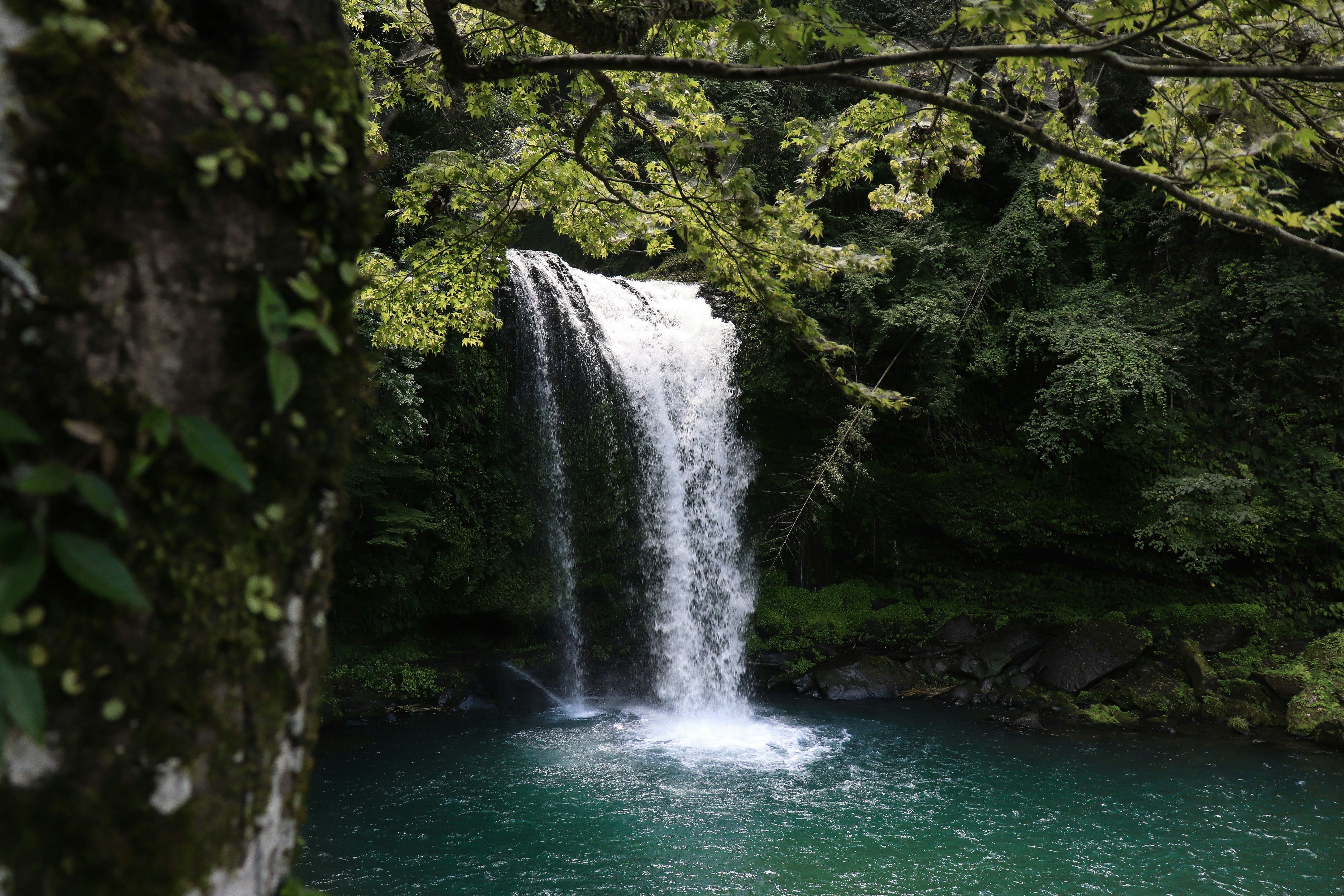
When he saw, from his security, the waterfalls again beginning to flow, this man descended among the other sons of men. He found that they were thinking and talking in an entirely different way from before; yet they had no memory of what had happened, nor of having been warned. When he tried to talk to them, he realized that they thought that he was mad, and they showed hostility or compassion, not understanding.
At first he drank none of the new water, but went back to his concealment, to draw on his supplies, every day. Finally, however, he took the decision to drink the new water because he could not bear the loneliness of living, behaving and thinking in a different way from everyone else. He drank the new water, and became like the rest. Then he forgot all about his own store of special water, and his fellows began to look upon him as a madman who had miraculously been restored to sanity.”
“When the Waters Were Changed” from Tales of The Dervishes by Idries Shah. This version is attributed to Dhun-Nun, the Egyptian (died 860), through Sayed Sabir Ali-Shah, a saint of the Chishti Order, who died in 1818.
This story was first introduced to me by one of my Fourth Way teachers in the 1990s, when I was living in Los Angeles. It resonated strongly, but at the time, it seemed more curious and abstract than it does now. Back then, I was beginning a journey that would lead to a series of choices like those the person in the story faces: between clarity and connection, between seeing and belonging.
When I first started what I guess one might call a deeper spiritual search, it felt like a destination I could reach by finding the right knowledge, teaching, or method. Something more aligned, more free, more true would be waiting on the other side. There’s truth to that, but after years of cycles and rounds of discovery while maintaining an unwavering orientation toward self-work, I’ve realized the destination looks different from what I originally imagined. What I didn’t fully anticipate was the loneliness.
One way I’ve been looking at this shift is through the lens of the horizontal and the vertical. Early in life, much of my cultural conditioning was that life was a linear sequence of events leading somewhere in the material world. While that is a commonly trodden path, for whatever reason, it wasn’t something I could put all my faith in. Awareness of the vertical dimension brings another perspective, one less concerned with material or intellectual security and more concerned with states of being and orientation. But moving into that vertical awareness often means stepping out of the shared reality most people inhabit. You start to see differently, and that seeing creates distance.
Looking back at world events over the last couple of decades, particularly the last ten years, I can see how I believed that if enough information got out, if enough people could see what was happening, and if there were enough people with a clear understanding of the facts and details, the world would change for the better. While I still hope we will find ourselves in a place of greater peace, love, and connection across the entire human race, I doubt real change occurs in such a linear, data-driven, and material way. What has been a real eye-opener is how few people apparently care to see the truth and how little genuine understanding exists, even when presented with incontrovertible evidence.
“No problem can be solved from the same level of consciousness that created it.”
– Albert Einstein
I witness those stuck at a certain level of conscious awareness repeating the same patterns. They keep cycling through the same behaviors, doing the same things, without achieving a deeper understanding or realization that would produce real change. Most people don’t even seem to want that. They’re looking for fulfillment of desires, elimination of uncertainty, and a constant state of security. They’re apparently willing to trade their freedom for it. Yet remaining at the same level of consciousness where those problems are created and maintained only perpetuates them.
But it’s understandable. Seeing beyond the veil can be both shocking and destabilizing. It often puts one in a difficult position, as with the man who preserves the old water. He can maintain his clarity and live in complete isolation, or he can drink the new water and rejoin the community. The story doesn’t offer a third option. There’s no suggestion that he can find others who also saved the water, nor any hint that he might gradually help people remember. He’s alone with his sanity, and that sanity makes him appear mad.
I’ve felt that. The moments when you try to share what you see and realize that, for whatever reason, the words don’t translate or land. You realize that certain conversations are no longer possible with people you’ve known for years. You recognize that what seems obvious and vital to you can seem irrelevant or threatening to others. You can either keep speaking a language no one understands or learn to move between both worlds, though that often requires self-censoring or suppressing a little part of you each time. These days, it feels like walking a tightrope, trying to make room for both.
What I also find surprising is how little those spiritual attributes and capacities, which often require so much effort and sacrifice, are seen, recognized, and valued in a world where nearly everything passes through a materialist, commercial filter. The qualities that come from real inner work, such as presence, discernment, the capacity to hold complexity, and an orientation toward truth over comfort, have almost no currency in many circles. They often make you less functional in conventional terms, less able to participate in the agreed-upon fictions that keep social reality running smoothly.
Now, at this stage of life, I look back and wonder: if I’d known then what I know now about the spiritual path, about the critical steps along the way where we make decisions oriented toward purity, connection, and love, and where we maintain our sense of soul rather than trading it for short-term gain, comfort, and convenience, would I still do it? If I’d known how isolating it would be, how many relationships would become impossible to sustain, and how much I’d lose of the ordinary comforts of belonging, would I still choose this?
The answer is pretty clear. Yes, it’s still worth it. I’d do it all over again, more or less, with a few minor adjustments. I now understand why the man in the story eventually drinks the new water. The loneliness can sometimes become unbearable. The cost of maintaining your own reality against the entire world’s insistence that you’re wrong, crazy, or broken is immense.
I haven’t drunk the new water yet, and probably never will, but I understand the temptation. Maybe the question now isn’t whether to maintain clarity at any cost, but whether it’s possible to find others who also saved the water. Not to build some separate community of the enlightened, but to have someone to talk to who remembers what the old water tasted like. Someone who understands that what seems like madness from one perspective is coherence from another. Others who share that orientation, live in the vertical dimension, and have maintained a connection with our true nature and source, even if it means standing somewhat apart from the consensus reality everyone else inhabits.